
What really causes hair loss might surprise you…
It's not just DHT. New research reveals a hidden mechanical mechanism driving follicle death — and how reversing it can bring your hair back.
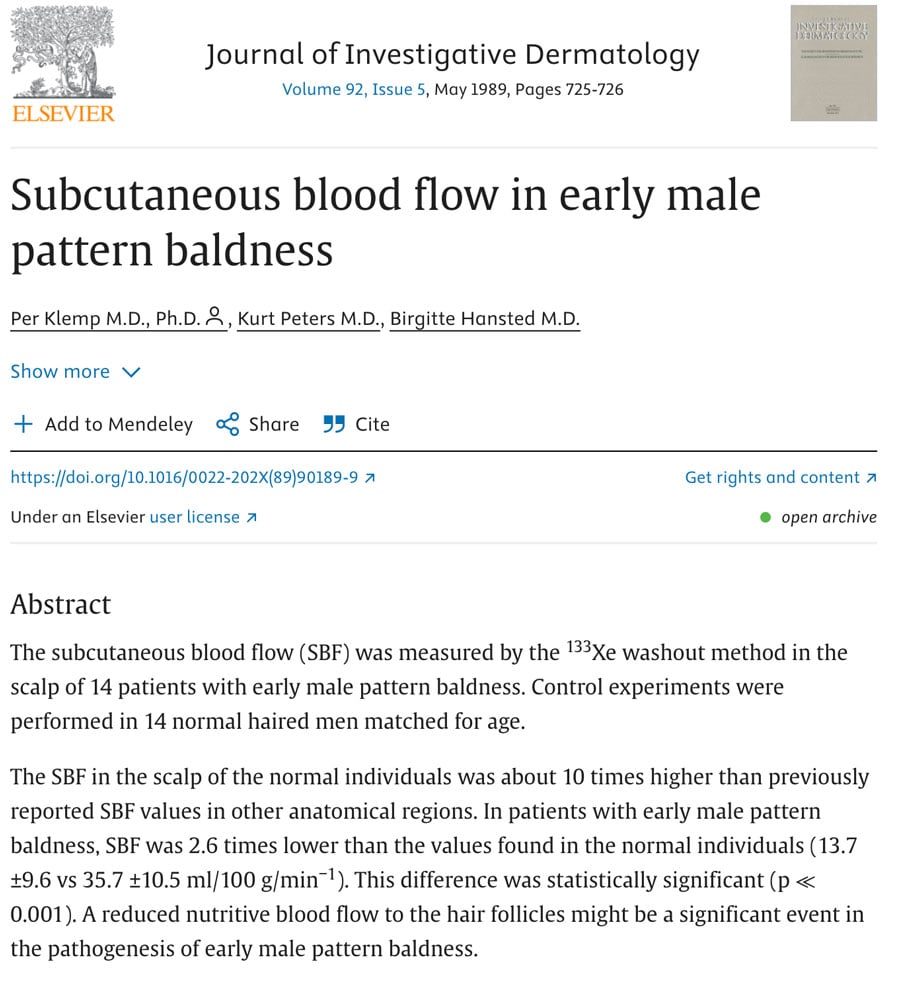
Lower blood flow in balding scalps
Saw improvement with scalp massage
Cumulative massage for visible regrowth
Participants in the 2019 study
A man who held his arm up for 30 years
Meet Sadhu Amar Bharati — an Indian man who raised his arm as an act of religious devotion and never put it back down. For over 30 years his arm remained raised.
And over those three decades, something remarkable (and terrifying) happened: his arm withered away. Not from disease. Not from infection. Simply from reduced blood flow.
This is exactly what happens to your hair follicles. When blood flow is reduced, the follicle starves, miniaturizes, and eventually stops producing hair altogether.

Key insight: Hair follicles are living "mini-organs" — they need a constant supply of oxygen and nutrients delivered by blood vessels to survive and thrive.


Hair follicles are like "mini-organs"
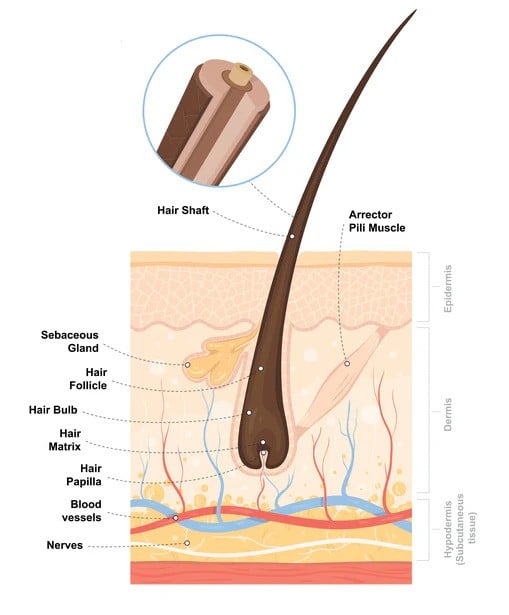
Each hair follicle is a complex biological structure that requires a constant supply of blood — carrying oxygen and nutrients — to produce strong, healthy hair.
Blood vessels lead directly into the dermal papilla (the hair bulb at the base of the follicle). When this blood supply is restricted, the follicle undergoes progressive miniaturization across hair growth cycles.
The result? Each new hair grows back thinner, shorter, and weaker — until eventually the follicle stops producing hair altogether. This process is called hair follicle miniaturization — and it's the biological mechanism behind male pattern baldness.
Why does it always happen in the same pattern?
If DHT were the only cause, hair loss would be random. But it follows a precise, predictable pattern — Stages 1 through 6 of the Norwood-Hamilton scale. Why?

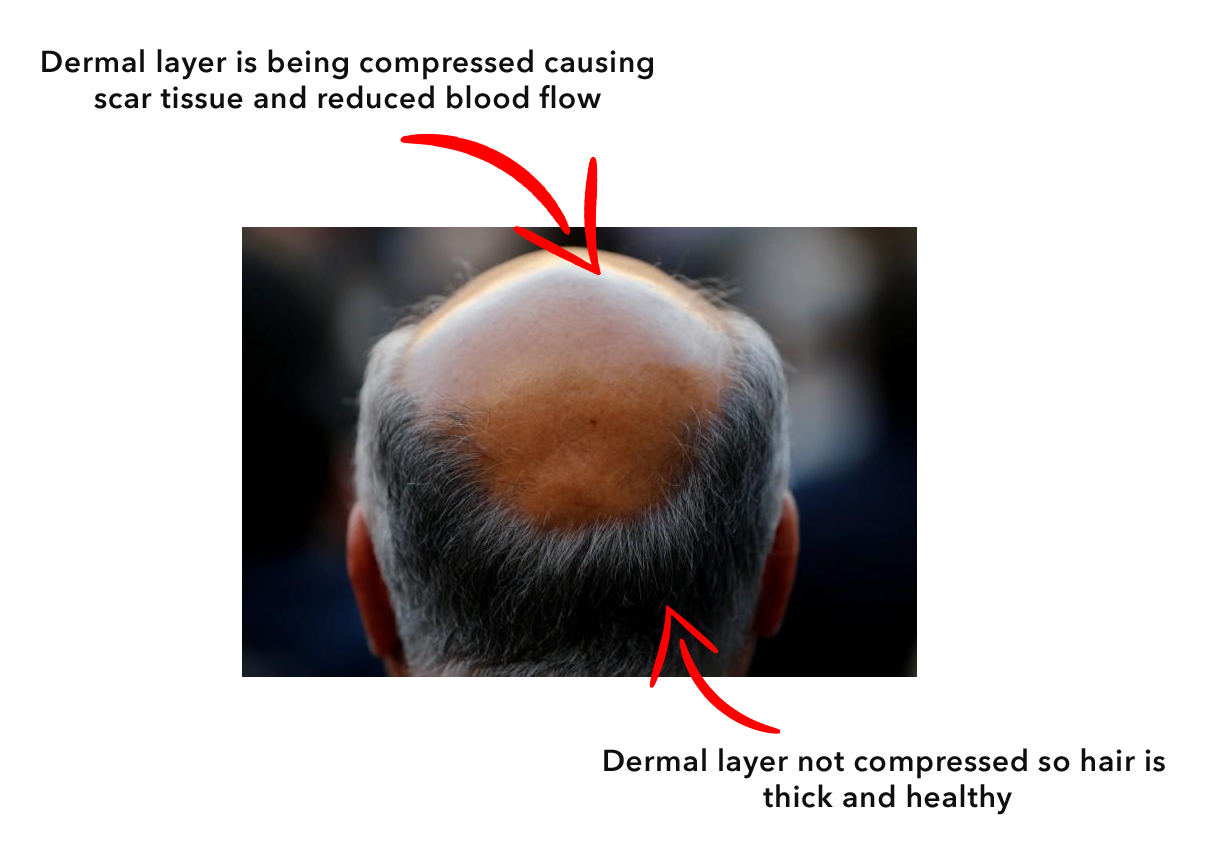
The answer lies in scalp tension distribution. The muscles surrounding your scalp create tension that pulls downward — and this tension is highest in exactly the areas where baldness begins first. The pattern of hair loss mirrors the pattern of scalp tension.
Scientists created an incredible computer model
To investigate the tension theory, scientists built an advanced computer model of the scalp — mapping how mechanical forces distribute across the skull in three dimensions.
They applied the known patterns of downward muscular tension across the scalp perimeter and calculated how compression concentrated in the dermal layer.
The result was extraordinary.
The Finding
The EXACT SAME PATTERN of compression that emerges from scalp tension maps precisely onto the Norwood-Hamilton baldness pattern — Stage by Stage.

How scalp tension destroys your hair
A chain reaction of physical and biological events — all triggered by chronic muscular tension in your scalp.
Chronic Tension Builds
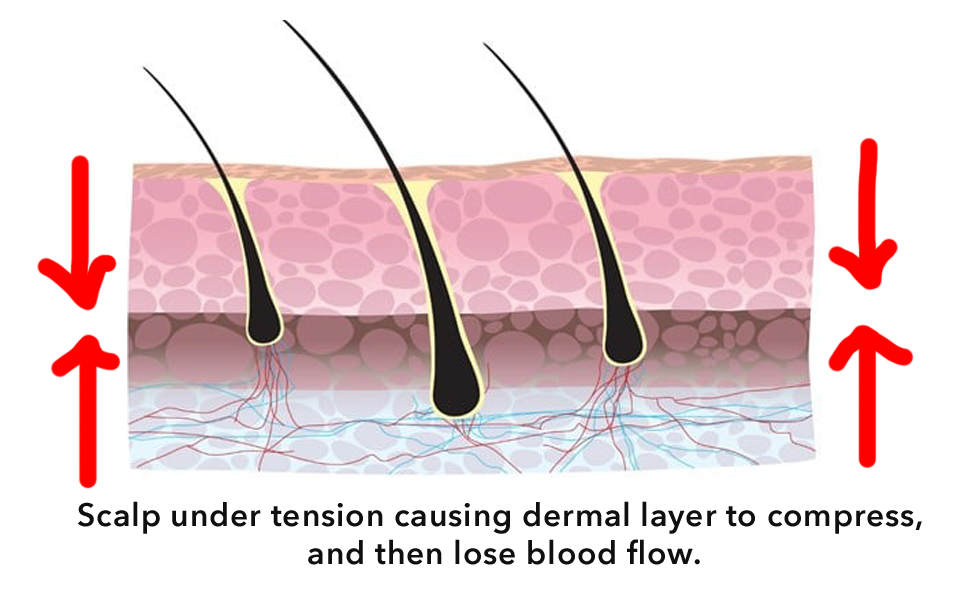
The muscles surrounding your scalp remain chronically active, creating constant downward and inward pressure on the scalp skin.
Dermal Layer Compresses
The tension compresses the dermal layer — the thin tissue where hair follicles live and where blood vessels supply them with nutrients.
Blood Flow Is Restricted
Compression narrows the tiny blood vessels feeding the follicles. Less blood means less oxygen and fewer nutrients reaching the hair bulb.
Scar Tissue Forms
As a protective response to chronic compression, the body lays down scar tissue — which is even less vascular than normal dermis, creating a vicious cycle.
Follicles Miniaturize & Die
Starved of blood, follicles progressively miniaturize with each growth cycle — producing finer, shorter hairs until they go dormant entirely.
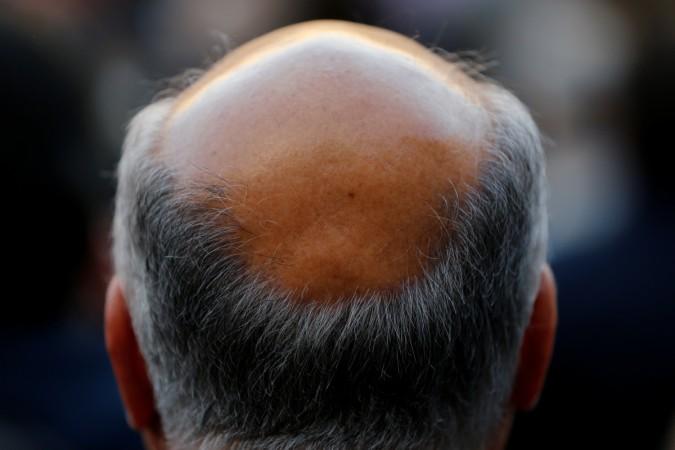
"Mechanistically, the scalp behaves like a drum skin with tensioning muscles around the periphery. These muscle groups can create a 'tight' scalp when chronically active."
— Dr. Brian J Freund, ResearcherWhere does DHT fit in?
DHT (dihydrotestosterone) is often blamed entirely for hair loss. And while it does play a role, the story is more nuanced.
DHT is strongly linked to the formation of scar tissue. In areas of high scalp tension (where blood flow is already reduced), DHT accelerates the fibrotic (scar-forming) process — further reducing blood supply to follicles.
This explains several important observations:
- Men with high DHT levels tend to experience faster, more severe baldness
- Women rarely experience this pattern — they have much lower DHT levels
- DHT blockers (like finasteride) can halt progression — but they address a downstream effect, not the root cause
- The side and back of the scalp (low tension, high blood flow) retain hair even in advanced baldness

The key insight: DHT amplifies the damage caused by scalp tension and poor blood flow — but without the mechanical root cause, DHT alone wouldn't create the characteristic baldness pattern.
The hair transplant industry has lied to us!
Hair transplants move hair from the "safe zone" (back and sides — low tension, good blood flow) to the top of the scalp. They work — initially.
But if the underlying tension and blood flow problem isn't addressed, the transplanted hairs will also thin over time in their new high-tension environment.
This explains why many celebrities who have had hair transplants see their results fade over time — their transplanted hair, placed in a tight, low-blood-flow scalp, undergoes the same miniaturization process.


Without fixing scalp tension and blood flow, even successfully transplanted hair will eventually thin and miniaturize — making hair transplants a very expensive short-term fix.
What happens if you stop the compression?
Researchers injected scalp-surrounding muscles with a muscle relaxant to reduce downward pressure for 3–4 months. The results shocked even the scientists.
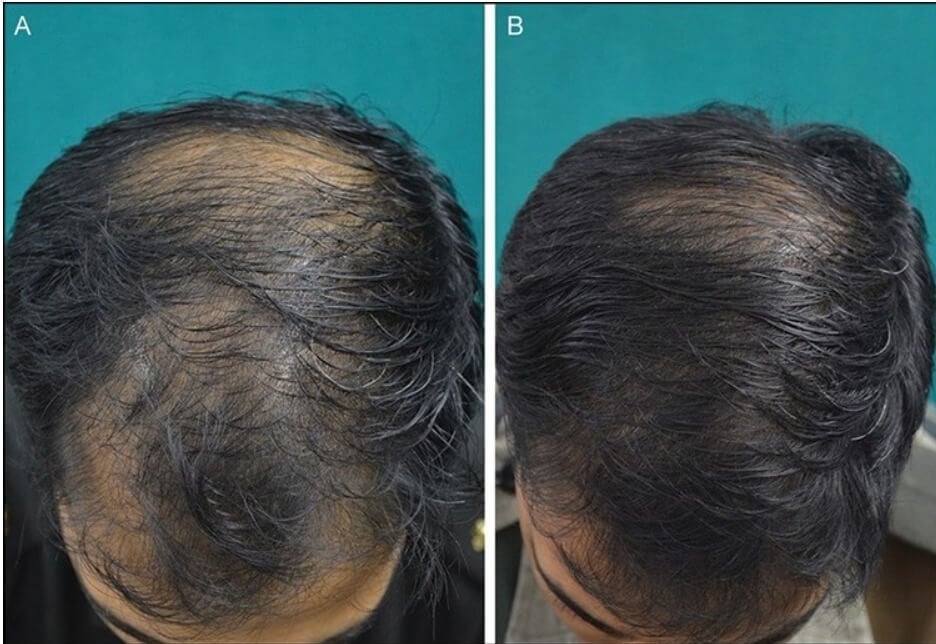
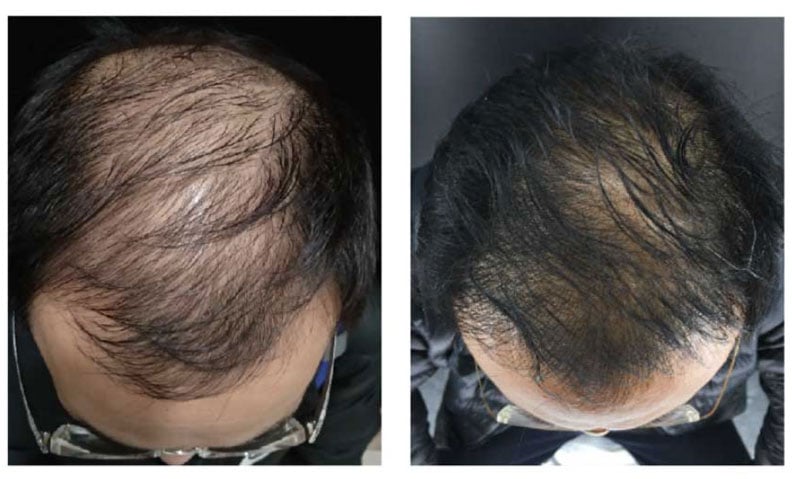
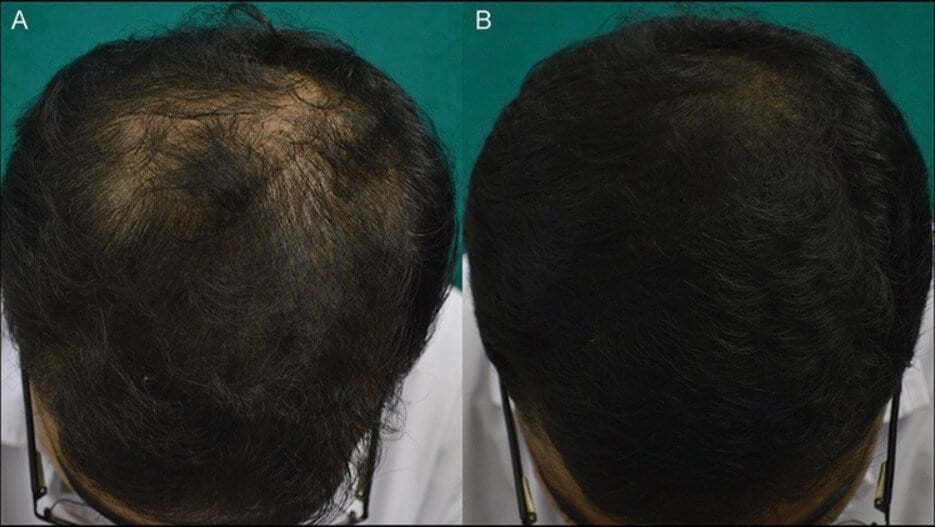
simply by reducing scalp muscle tension
There was just 1 small problem: muscle relaxant injections cost thousands of dollars, need to be repeated every 3–4 months, and can have serious side effects. Not a practical long-term solution — but it proved the theory beyond doubt.
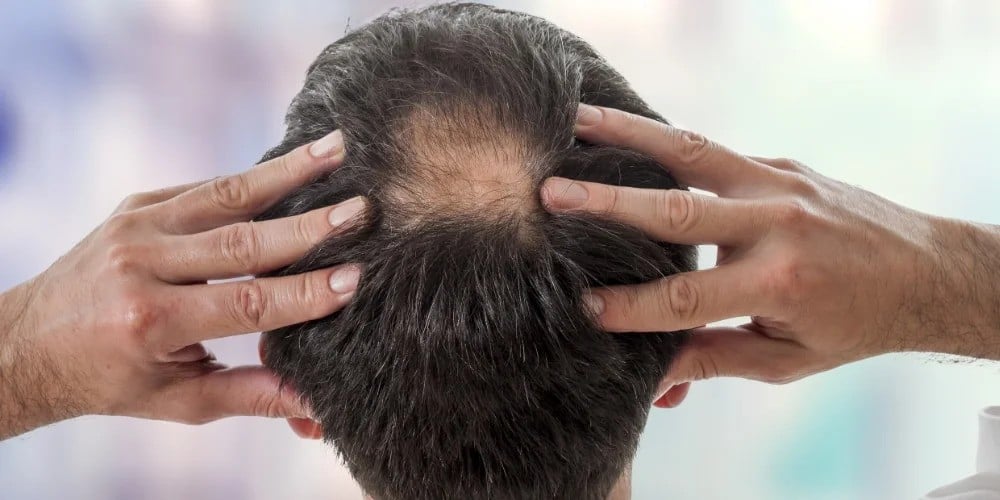
What about scalp massage?
A 2019 study recruited 300 participants with hair loss and tracked their results with regular manual scalp massage. No drugs. No surgery. Just mechanical pressure applied to the scalp.
The single most important variable that predicted success wasn't technique, timing, or product used. It was one simple factor:
The Key Variable
Cumulative
Massage Hours
The target? 36 cumulative hours of scalp massage. Participants who hit this threshold saw the most dramatic results — with 68% seeing visible improvement in hair loss.


Tissue remodelling: Unlike medication, changes made through massage create lasting physical modifications to the scalp — potentially permanent without needing to continue treatment indefinitely.
The KEY factor — and the massive obstacle
Scalp massage is proven to work. But there's a massive, practical problem: accumulating 36 hours of cumulative massage time is incredibly tedious and physically difficult.
Studies show that 95% of people abandon manual massage routines before reaching the threshold needed for results. Your hands and fingers fatigue, you lose track of time, it becomes a chore — and eventually you just stop.

Even Big Pharma accidentally proved blood is the answer
PRP — Platelet-Rich Plasma therapy — is an expensive treatment costing thousands of dollars where your own blood is extracted, concentrated, and injected directly into the scalp.
It produces consistent hair regrowth results. Why? Because it massively concentrates the blood supply directly at the follicle site — proving once again that blood flow is the critical factor for follicle health.
Big pharma makes far too much profit pushing pills that treat symptoms. But the root cause — scalp tension and reduced blood flow — can be addressed mechanically, without drugs or injections.
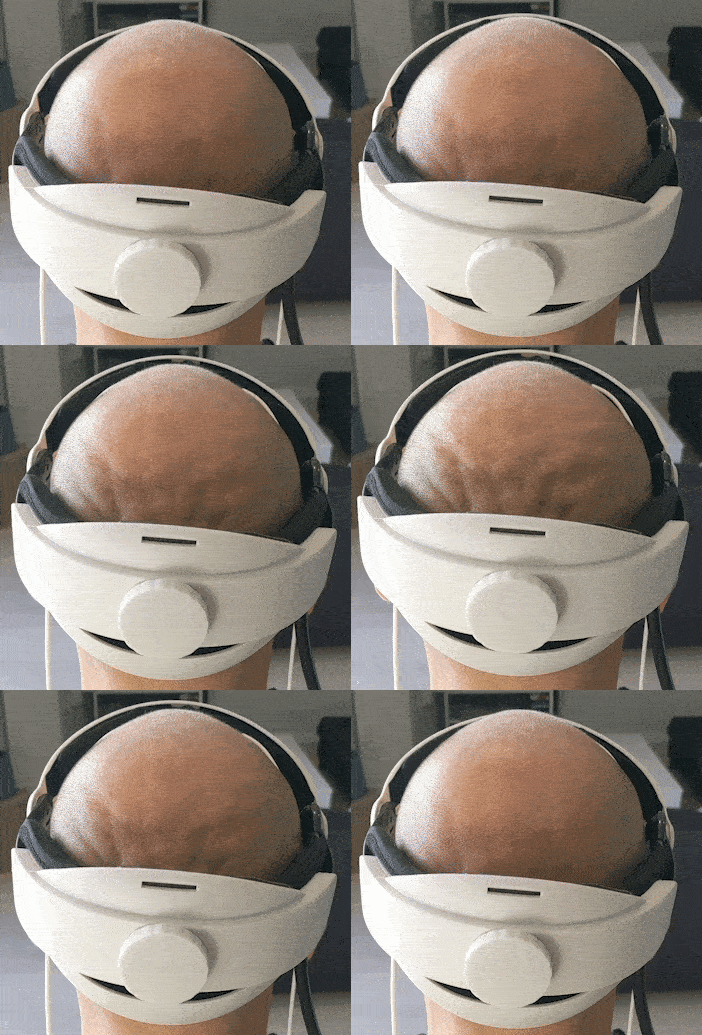
Introducing the Growband Pro
A fully automated, hands-free scalp massage device developed by scientists from the University of Bristol and University of Birmingham — designed to accumulate your 36-hour massage target effortlessly.

Massage Action
Pushes upward on scalp perimeter — equivalent to full manual massage across the entire crown area.

Tension Reduction
Targets peripheral muscles to reduce chronic muscular tension and scalp compression at the source.

Vasodilation
Pressure-induced vasodilation increases blood flow to the dermal layer — exactly where it's needed.

Does the Growband actually increase blood flow?
Researchers attached advanced blood perfusion monitors to test subjects and measured scalp blood flow — in Blood Perfusion Units (BPU) — before, during, and after Growband use.
The data showed a measurable, sustained increase in blood flow to the scalp's dermal layer during and after use — the exact mechanism needed to reverse follicle miniaturization.


The device went viral when biohackers discovered how well it worked — combining science-backed mechanical stimulation with the proven benefits of scalp massage research.
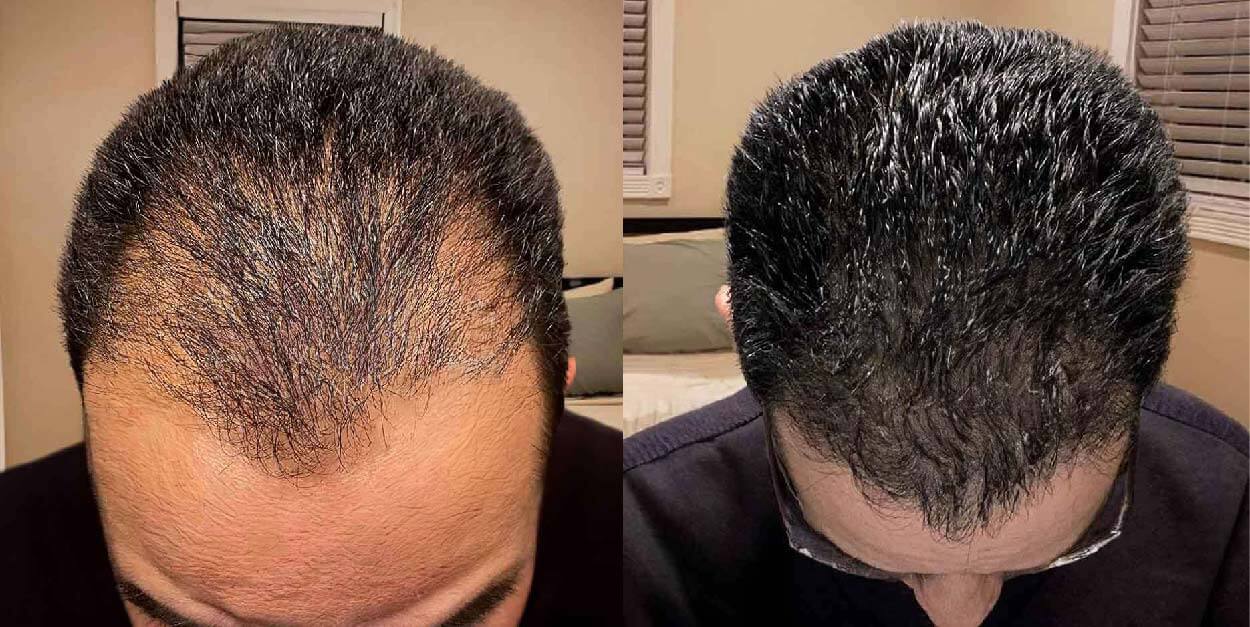
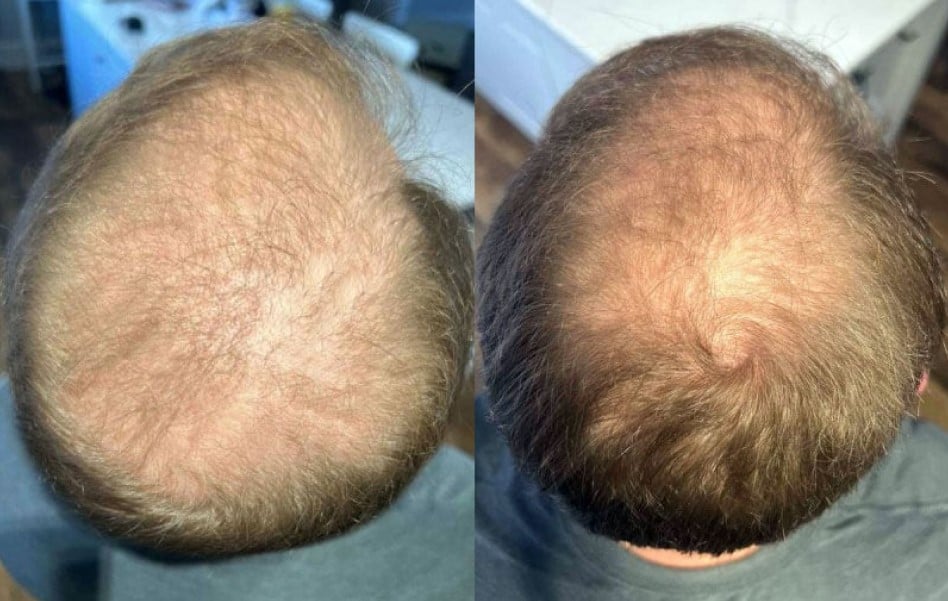
What Growband users are experiencing
Scalp improvements typically become visible around 1 month. Hair regrowth follows shortly after — with results that continue to improve over time.




The tissue remodelling advantage
Unlike medications that require permanent daily use to maintain results, consistent scalp massage creates physical changes to the scalp tissue through a process called tissue remodelling.
The changes to blood vessel density, dermal elasticity, and scalp tension don't disappear the moment you stop treatment — they can persist for months or years after you've achieved your goals.
- Fully automated — no hand fatigue or discipline required
- Tracks cumulative massage time automatically
- Developed by university researchers, not marketers
- Addresses the root cause, not just symptoms
- Can be combined with Minoxidil, DHT blockers, or caffeine shampoo
- Results that improve over time, not fade